Quick answers
- Best time to visit
- May to June and September to October: warm sea, sunny days, fewer crowds than July and August.
- How many days
- Four to seven days covers the city, the beaches and two or three day trips.
- Nearest airports
- Larnaca (LCA), about 45–60 minutes by car, and Paphos (PFO), about 50 minutes.
- Best area for a beach holiday
- Germasogeia tourist area, east of the centre, where hotels, restaurants and sandy beaches line the coast.
- Getting around
- Bus 30 runs along the whole seafront. Hire a car for day trips; Cyprus drives on the left.
Is Limassol worth visiting?
Yes. Limassol is Cyprus's second-largest city and its liveliest coastal destination. In one place you get a long seafront promenade, sandy beaches, a medieval castle and old town, a modern marina, and some of the island's best restaurants. The Troodos mountains, wine villages and ancient sites such as Kourion and Amathus are all within an hour's drive.
The city works well for many kinds of trip: families come for the safe, shallow beaches; couples for the marina and dining; remote workers for the sunshine and fast internet in spring and autumn. With more than 300 days of sunshine a year, Cyprus has one of the longest beach seasons in Europe.
When is the best time to visit Limassol?
The best time to visit Limassol is May to June and September to October. The sea is warm enough for swimming, days are sunny, and it is less crowded and less hot than peak summer.
| Season | Months | What to expect |
|---|---|---|
| Spring | March–May | Green countryside, wildflowers, pleasant walking weather. The sea warms up for swimming from about May. |
| Summer | June–August | Hot and dry, often above 30 °C. Peak beach season, busiest and most expensive months. |
| Autumn | September–November | The sea stays warm into October. Wine festival season and quieter beaches. |
| Winter | December–February | Mild and green, with occasional rain. Good for city breaks, hiking and the Troodos mountains. |
Festivals worth planning around
- Limassol Carnival: the island's biggest carnival, with parades and parties across the city. The 2027 edition runs from 4 to 14 March, ending with the Grand Carnival Parade on Sunday 14 March.
- Limassol Wine Festival: held each year around the Municipal Garden in late September and early October, with tastings from Cypriot wineries, traditional food and live music. In 2026 it ran from 26 September to 4 October.
Where to stay in Limassol
Limassol stretches for about 15 km along the coast, so the area you choose shapes your trip. These are the main options:
- Germasogeia tourist area
- The classic holiday district east of the centre. Sandy beaches, the seafront promenade, tavernas, bars and supermarkets are all walkable, and bus 30 connects you to the Old Town and Marina. Best for beach holidays, families and groups.
- Old Town and city centre
- Narrow streets around Limassol Castle, the old port and the Molos promenade, with cafés, nightlife and shopping. Best for a city break.
- Limassol Marina
- Upscale apartments and restaurants next to the yacht harbour, a few minutes' walk from the Old Town. Best for a luxury short stay.
- Agios Tychonas and Amathus
- The quieter, high-end resort coast further east, home to many five-star hotels. Best if you want calm and plan to drive.
What are the best beaches in Limassol?
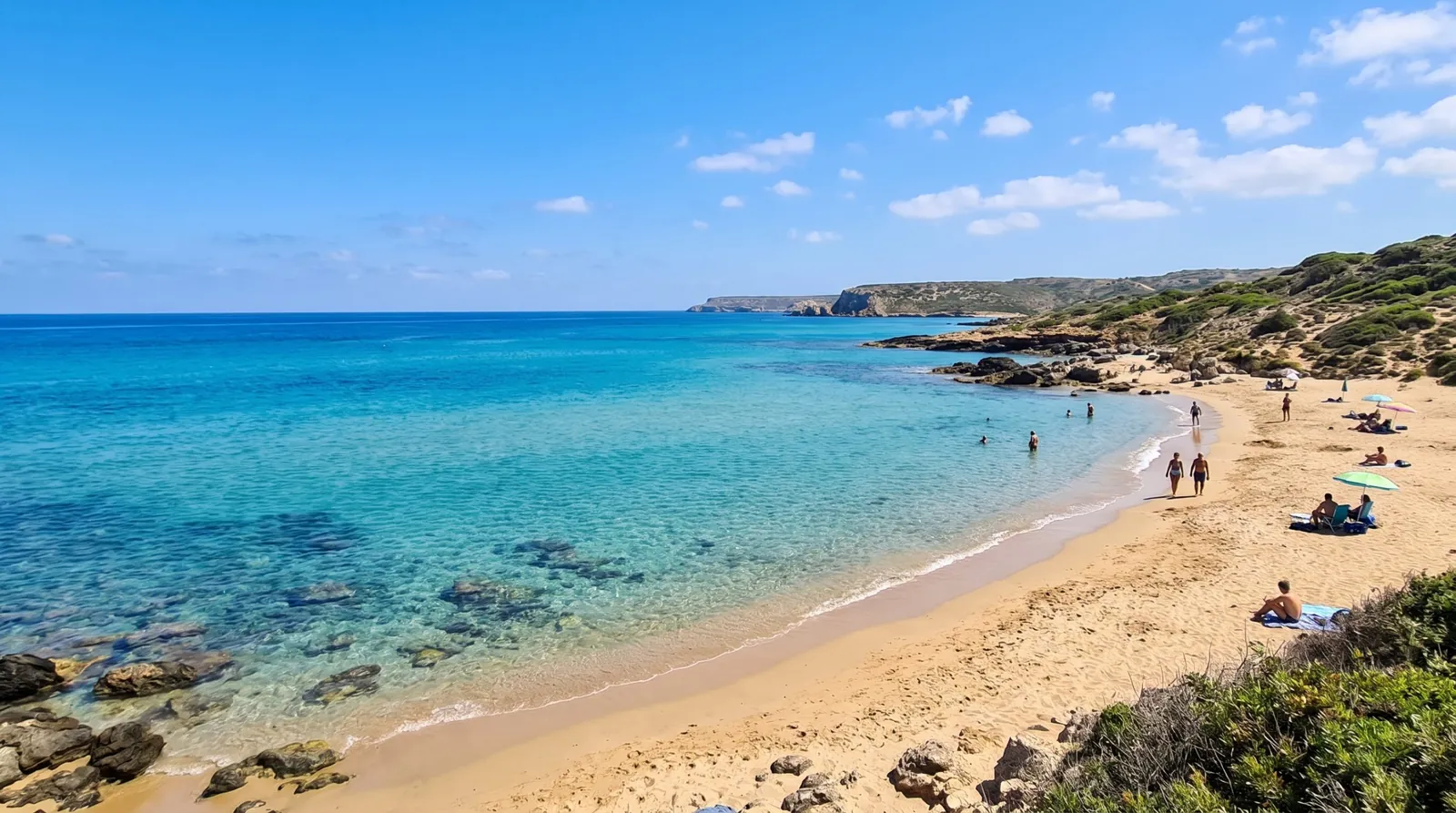
Limassol's city beaches are mostly sand or fine grey sand, with sun loungers, showers and lifeguards in summer. For wilder scenery, drive 20–30 minutes east or west.
Dasoudi Beach
A long sandy beach in the tourist area, backed by a pine-shaded park. Sunbeds, showers, water sports and cafés make it one of the most popular family beaches in Limassol.
Akti Olympion
A central city beach of fine grey sand with sunbeds, changing rooms and lifeguards in season, plus plenty of cafés and bars close by.
Germasogeia seafront beaches
A row of sandy beaches in front of the hotels on the coastal road. They are easy to reach on foot from the tourist area and good for a quick swim before dinner.
Lady's Mile
A long, open sandy beach on the Akrotiri peninsula south-west of the city. It has shallow water, beach bars and restaurants, and it is quieter than the city beaches on weekdays.
Governor's Beach
About 20 km east of Limassol. Dark sand coves sit beneath striking white chalk cliffs, with tavernas on the hill above.
Kourion Beach
A wide sandy beach below the ancient city of Kourion, about 20 minutes west. Pair it with a visit to the archaeological site.
Pissouri Bay
A sheltered golden-sand bay about 30 minutes west, with water sports and a hillside village known for its sunset views.
Top things to do in Limassol
- Walk the seafront promenade. Follow the coast from the Molos park in the centre towards the Marina. It is busiest around sunset.
- Explore the Old Town and Limassol Castle. The medieval castle sits among old streets, craft shops and tavernas near the old port.
- Visit Limassol Marina and the Old Port. Both are good for waterfront dining, yacht watching and evening drinks.
- See ancient Kourion. A Greco-Roman city on a clifftop, with a restored theatre overlooking the sea and well-preserved mosaics. Summer performances are held in the theatre.
- Tour Kolossi Castle. A 15th-century crusader keep, once a centre of sugar and Commandaria wine production. Bus 17 goes there from the city.
- Discover Amathus. The ruins of one of Cyprus's ancient city-kingdoms, just east of the tourist area on bus routes 30 and 31.
- Drive up to Germasogeia Dam and village. A short drive inland brings you to the reservoir, walking trails and traditional tavernas.
Best day trips from Limassol
- Troodos mountains and wine villages. Pine forests, Byzantine painted churches and villages such as Omodos, about an hour's drive into the hills. Several wineries offer tastings.
- Paphos. The harbour, the mosaics in the Archaeological Park, and the Tombs of the Kings. On the way, stop at Petra tou Romiou, the legendary birthplace of Aphrodite.
- Nicosia. The island's capital, with its Venetian walls, museums and old town crossing point. It is about an hour's drive.
- Akrotiri salt lake. In winter and spring flamingos gather on the lake, close to Lady's Mile.
How to get to Limassol and get around
From the airport
| Option | From Larnaca (LCA) | Good to know |
|---|---|---|
| Airport shuttle | About €10 per adult, 1 h 15 min–1 h 30 min | The Limassol Airport Express runs roughly every hour from early morning to around midnight. Buy tickets at the counter or on board. |
| Taxi | About €65–80, 50–60 min | Fares are metered and regulated, with higher rates at night. |
| Hire car | About 45–60 min | Cyprus drives on the left. A car is the easiest way to reach beaches and villages outside the city. |
Paphos Airport (PFO) is a similar distance to the west and has its own shuttle and taxi options to Limassol.
Getting around the city
Buses in Limassol are run by EMEL. Route 30 is the most useful for visitors: it runs frequently along the whole seafront, from the Amathus area in the east past the tourist area and the Old Port to My Mall in the west. You can buy tickets from the driver. Taxis and ride-hailing apps are easy to find in the tourist area, and the flat seafront path is good for walking and cycling.
What to eat and drink in Limassol
- Meze. A long parade of small dishes, from dips and grilled halloumi to sausages and slow-cooked meats. Order it for the table in a traditional taverna.
- Halloumi. Cyprus's famous cheese, best eaten grilled or fried, often with watermelon in summer.
- Souvlaki and sheftalia. Charcoal-grilled pork or chicken skewers and herby sausages, served in pitta.
- Kleftiko. Lamb slow-baked with potatoes until it falls apart.
- Commandaria. A sweet dessert wine from the villages north of Limassol and one of the oldest named wines in the world.
- Fresh seafood. Try the fish tavernas by the old port and along the coast.
For our favourite cafés, steakhouses and seafood restaurants, with walking times from the apartment, read where to eat in Limassol.
Practical tips for Limassol
- CurrencyEuro (€). Cards are widely accepted.
- LanguageGreek. English is spoken almost everywhere.
- PlugsType G (UK-style three-pin), 230 V.
- DrivingOn the left, as in the UK.
- Time zoneEastern European Time (UTC+2, UTC+3 in summer).
- SunStrong from spring to autumn. Bring a hat and high-SPF sunscreen, and stay in the shade at midday in July and August.
Limassol FAQ
Is Limassol worth visiting?
Yes. Limassol combines sandy beaches, a long seafront promenade, a medieval old town, a modern marina and excellent food, with ancient sites, wine villages and the Troodos mountains within an hour's drive.
What is the best area to stay in Limassol?
For a beach holiday, the Germasogeia tourist area is the best base: beaches, restaurants and shops are walkable and bus 30 runs to the Old Town. For a city break, stay near the Old Town or Limassol Marina.
How many days do you need in Limassol?
Four to seven days is ideal. That gives you time for the beaches, the Old Town and Marina, and day trips to Kourion, the Troodos mountains or Paphos.
Which airport is closest to Limassol?
Larnaca (LCA) and Paphos (PFO) are both about 45–60 minutes away by car. Larnaca has more flights and an hourly airport shuttle to Limassol.
Do you need a car in Limassol?
Not for the city itself, as bus 30 runs along the seafront and taxis are easy to find. A hire car is the best way to see beaches and villages further out. Cyprus drives on the left.
When is the sea warm enough to swim in Limassol?
Most visitors swim comfortably from about May to early November, with the warmest water from July to September.